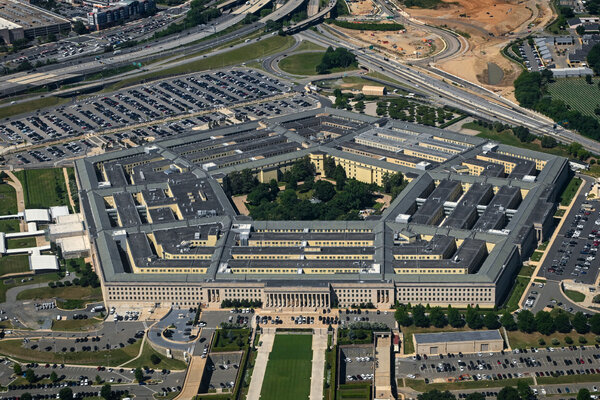
In mid-July, many of America's largest military contractors received a sharply worded letter from the Air Force: by September 1, all software used in weapons and control systems must be completely purged of products developed by AI company Anthropic. Failure to comply would risk terminating all business with the Pentagon. Less than a month later, however, the contractors received a surprise retraction — they could, at least for now, ignore the earlier order to purge Anthropic products.
The dramatic back-and-forth highlights the chaos and contradictions of the AI wave that has swept national security agencies in recent months. The Pentagon still operates aircraft designed in the 1950s, yet is desperately racing to keep pace with AI models whose capabilities leap forward on a monthly basis. In Anthropic's case, the tension runs deeper: the company tried to impose restrictions on how the US military uses its technology, prompting Defense Secretary Pete Hegseth to clash publicly with its CEO Dario Amodei.
The irony is that senior NSA officials believe losing Anthropic's powerful Mythos model would make it far harder to find and fix vulnerabilities in the Pentagon's own systems. In fact, despite the initial ban order, the NSA was still allowed to keep using the company's products — it was conducting critical tests with Mythos to assess its potential for breaching highly protected foreign networks. According to one recently departed senior US official, stopping the use of Mythos would amount to "unilateral disarmament."
From the Department of Defense to the CIA and NSA, the government has poured billions into using AI to develop autonomous weapons requiring less human intervention, test military network vulnerabilities, and even test nuclear codes to ensure those systems can't be broken by enemy AI. AI is also critical to President Trump's "Golden Dome" space-based missile defense vision — though many experts consider the concept near-fantastical.
But almost none of this prior work anticipated the capabilities of Mythos and its ilk, nor fully accounted for the possibility that China could field a stronger, cheaper version within just months. That could greatly enhance China's ability to penetrate US communications networks, water systems and power grids — as it successfully did in the two large-scale attacks launched during the Biden era, codenamed "Volt Typhoon" and "Salt Typhoon."
A sober assessment of this arms race: the United States is now trapped in a paradox of "fear and dependence" — it fears uncontrolled frontier AI companies like Anthropic, yet cannot do without their capabilities; it worries about China's pace of catching up, while its own policy swings between bans and reliance. When the speed of technological evolution far outstrips the pace of bureaucratic decision-making, this kind of oscillation is likely to persist for a long time.