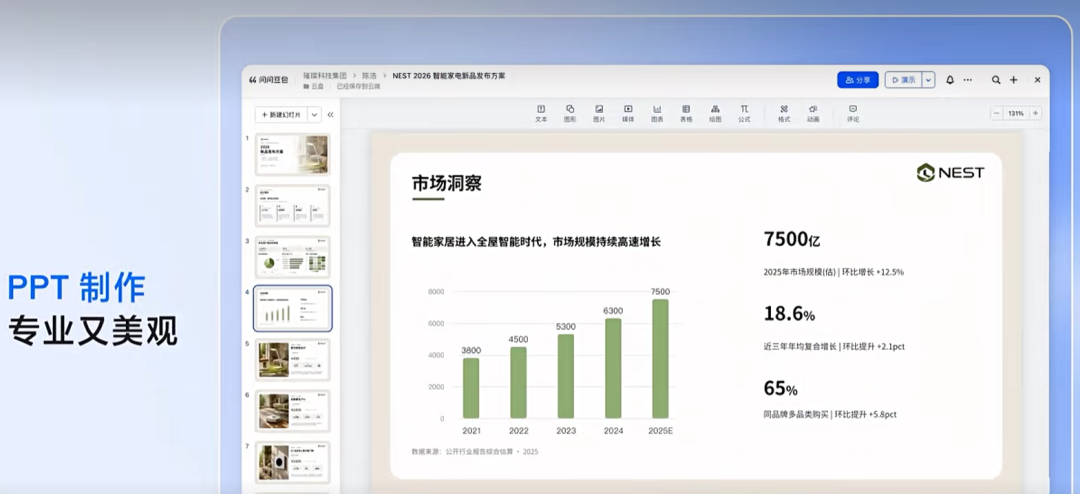
Breaking News: Doubao Work Officially Launches
On August 27, 2026, ByteDance officially launched a standalone AI productivity application as a unified gateway for enterprise workflows. This release marks the successful completion of a month-long internal reorganization—teams from Feishu, TRAE, and Coze were integrated into the Doubao ecosystem.
The new platform operates as an advanced autonomous agent capable of handling multi-dimensional office tasks: aggregating dispersed information from meetings and group chats, generating multimedia content, writing code, and even manipulating virtual desktops with precise editing capabilities. Initially, the service targets tech, e-commerce, and education sectors before expanding into specialized fields like data analysis and remote operations.
Strategic Background: From Fragmentation to Integration
The fundamental reason for this large-scale consolidation lies in the company's broader strategic framework, emphasizing focusing resources on core, interconnected business pillars. Prior to this shift, the company's AI offerings were highly fragmented: different teams operated in silos, leading to brand confusion, disjointed user experiences, and inefficiencies in data integration.
By merging foundational office infrastructure with advanced developer tools and consumer-facing AI models, the company aims to create a multiplicative effect where these distinct capabilities nourish one another. The ultimate goal is to establish a singular user mindset where the brand is synonymous with comprehensive AI-driven productivity.
Industry Competition: Giants' B2B Moves
This development is also placed within the context of intense industry competition. Rival tech giants are simultaneously restructuring their own enterprise software divisions. For instance, competitors are leveraging their dominant social messaging platforms or deep cloud ecosystem integrations to capture the B2B market.
In contrast, ByteDance's methodology involves completely internalizing and harmonizing its diverse technological assets before deploying a cohesive, all-in-one workspace solution. Industry observers note that if a unified AI assistant can seamlessly execute cross-application tasks, it could potentially disrupt the entrenched dominance of traditional collaborative platforms from the outside.
PLUS Tutorial: How Enterprises Should Evaluate AI Assistant Tools
For enterprises looking to introduce AI assistants to improve work efficiency, choosing the right tool is crucial. Here's a four-step evaluation method:
Step 1: Identify Business Pain Points
First, map out bottlenecks in current workflows: - Information overload: Employees need to process大量 emails, messages, documents daily - Repetitive tasks: Such as meeting minute compilation, data entry, report generation - Cross-system collaboration: Need to switch between multiple platforms with unintegrated data
Step 2: Assess Functional Fit
Confirm whether candidate tools support: - Multimodal processing capabilities: Can they handle text, images, audio, video simultaneously - API integration capabilities: Can they connect with existing enterprise systems (such as CRM, ERP) - Customizable workflows: Can they automate processes according to enterprise business logic - Data security compliance: Do they meet industry data protection requirements (such as GDPR, classified protection)
Step 3: Test Real-World Effectiveness
Don't just watch demos; conduct real-scenario testing: 1. Select 3-5 typical business scenarios (such as customer inquiry handling, sales data analysis) 2. Have frontline employees actually use the tool for 1-2 weeks 3. Record efficiency improvement metrics (such as task completion time reduction percentage, error rate decrease) 4. Collect user feedback, focusing on usability and learning curve
Step 4: Calculate ROI
Comprehensively consider: - Direct costs: Subscription fees, training costs, integration development costs - Indirect benefits: Value of time saved by employees, loss avoidance from reduced errors, customer satisfaction improvement - Long-term value: Whether it helps attract talent, enhance brand image, open new business opportunities
Perspective: The Future Form of AI Office
The launch of Doubao Work reveals a trend: future office software will no longer be isolated tools, but intelligent "digital employees." They can understand context, proactively offer suggestions, and even autonomously complete complex tasks.
But this doesn't mean humans will be replaced. On the contrary, AI's intervention will make human core values more prominent—creativity, judgment, emotional connection capabilities. When machines take over repetitive operations, humans can focus on higher-value work: strategic planning, customer relationships, innovative design.
In the next three years, we will see more "AI-native" office applications emerge. They won't be traditional software with a chatbot added on top, but rather workflows redesigned from the ground up around AI capabilities. For enterprises, preparing early and actively experimenting will position them to seize opportunities in this transformation.