Breaking News: Robots Surpass Human Limits
On August 22, 2026, on the opening day of the second World Humanoid Robot Games held in Beijing, mechanical athletes achieved unprecedented milestones—surpassing the legendary human record previously set by Usain Bolt in the 100m sprint.
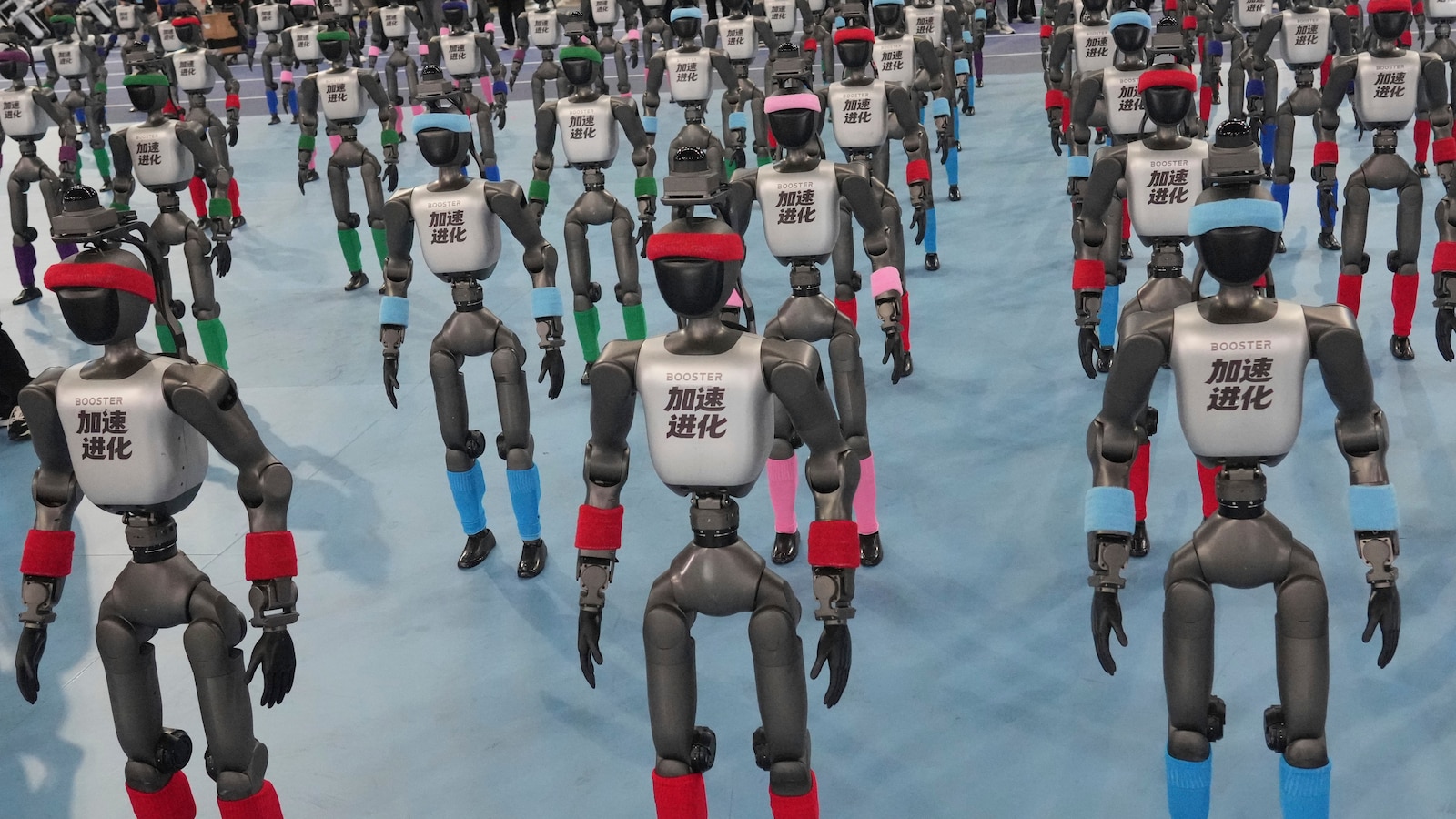
According to event organizers, over two thousand mechanical participants gathered for this competition. One robot completed the 100-meter course in just 9.39 seconds, a remarkable achievement that eclipsed the human benchmark of 9.58 seconds established by the Jamaican sprinter in 2009. Furthermore, in the standing high jump, another mechanical competitor cleared 2.88 meters. This height not only dwarfed the previous mechanical best of 0.95 meters from the prior year but also exceeded the human world record of 2.45 meters set by a Cuban athlete in 1993. Both record-breaking machines were developed by the Beijing-based enterprise X-Humanoid.
Technical Breakthrough: From Imitation to Autonomous Generation
Prior to the official opening, a machine created by the smartphone manufacturer Honor reportedly ran a 100-meter trial in 9.32 seconds, reaching top speeds of 14.5 meters per second. Behind these breakthroughs is the support of the "Huisi Kaiwu" platform's dual-brain control system, marking an important leap for humanoid robots from "imitating human movements" to "autonomously generating movements."
The small-group final champion also came from Beijing Tiangong. The viral "shy run" robot achieved a time of 11.98 seconds. This unique running posture was not a pre-programmed fixed action, but an optimal strategy autonomously generated by AI based on real-time environmental conditions.
Industry Background: Intensifying US-China Tech Competition
This five-day spectacle highlights China's swift advancements in robotic engineering, occurring amidst an escalating technological rivalry with the United States. American authorities have intensified their examination of these machines: the Federal Communications Commission recently prohibited the importation of newly developed foreign-built mechanical humans, citing national security concerns aimed directly at the host country. Additionally, the Pentagon designated prominent manufacturer Unitree as an entity with alleged military connections, claims which the Chinese government strongly disputes.
Despite this, the multi-national event featured participants from countries like Germany, Japan, and the U.S., with competitions covering strength-based contests like weightlifting and tug of war.
PLUS Tutorial: How Enterprises Should Evaluate Humanoid Robot Solutions
For enterprises considering introducing humanoid robots, here's a four-step evaluation method:
Step 1: Identify Application Scenarios
First, map out which tasks are suitable for humanoid robots: - Repetitive physical labor: Such as搬运, assembly, cleaning - Dangerous environment operations: Such as high temperature, radiation, toxic locations - Customer service scenarios: Such as reception, guided tours, simple consultations - Special skill requirements: Such as precision operations, high-speed movements
Step 2: Assess Technology Maturity
Confirm whether candidate robots possess: - Movement stability: Can they walk and run smoothly on different terrains - Environmental perception capabilities: Can they recognize obstacles and understand spatial relationships - Task learning abilities: Can they quickly master new skills through demonstration or instructions - Battery life: How long can they work on a single charge, and is charging convenient
Step 3: Calculate Return on Investment
Comprehensively consider the following factors: - Procurement costs: Current humanoid robot prices range from $50,000-$200,000 - Maintenance costs: Daily maintenance, software updates, parts replacement - Labor savings: How many human positions are replaced, how much wage expenditure is saved - Efficiency improvements: Can robots work 24 hours non-stop, and is output higher - Brand value: Whether adopting cutting-edge technology can enhance corporate image
Step 4: Develop a Gradual Deployment Plan
Recommend phased implementation: 1. Pilot testing: Select 1-2 typical scenarios for small-scale trials (1-3 months) 2. Effectiveness evaluation: Record key metrics (efficiency, accuracy, failure rate, user feedback) 3. Optimization and adjustment: Adjust workflows and robot configurations based on test results 4. Scale promotion: After verifying feasibility and economics, gradually expand deployment scope 5. Continuous iteration: Monitor technological evolution and upgrade hardware and software in a timely manner
Perspective: The Future Path of Humanoid Robots
This sports meet reveals a trend: the athletic capabilities of humanoid robots are rapidly approaching and even surpassing humans. But this doesn't mean they are ready for large-scale entry into daily life.
Industry experts point out that current machines remain primarily confined to exhibitions and research environments. Widespread practical application in everyday scenarios will require further development: - Cost control: Making them affordable for ordinary households and small businesses - Safety improvements: Ensuring no harm when working in close proximity to humans - Intelligence upgrades: Moving from executing preset actions to truly understanding task intentions - Standardized interfaces: Facilitating integration with other devices and systems
In the next five years, we may see humanoid robots率先 landing in the following areas: - Manufacturing: Replacing manual labor for precision assembly and quality inspection - Logistics and distribution: Moving goods and sorting packages within warehouses - Elderly care services: Assisting elderly people with daily life, providing companionship and monitoring - Emergency rescue: Entering dangerous areas to perform search and rescue missions
For enterprises, now is the best time to pay attention to and understand humanoid robot technology. There's no need to rush into large-scale procurement, but you should start small-scale experiments to accumulate experience and awareness. When technology maturity and costs reach a critical point, enterprises that prepare early will be able to seize opportunities quickly.