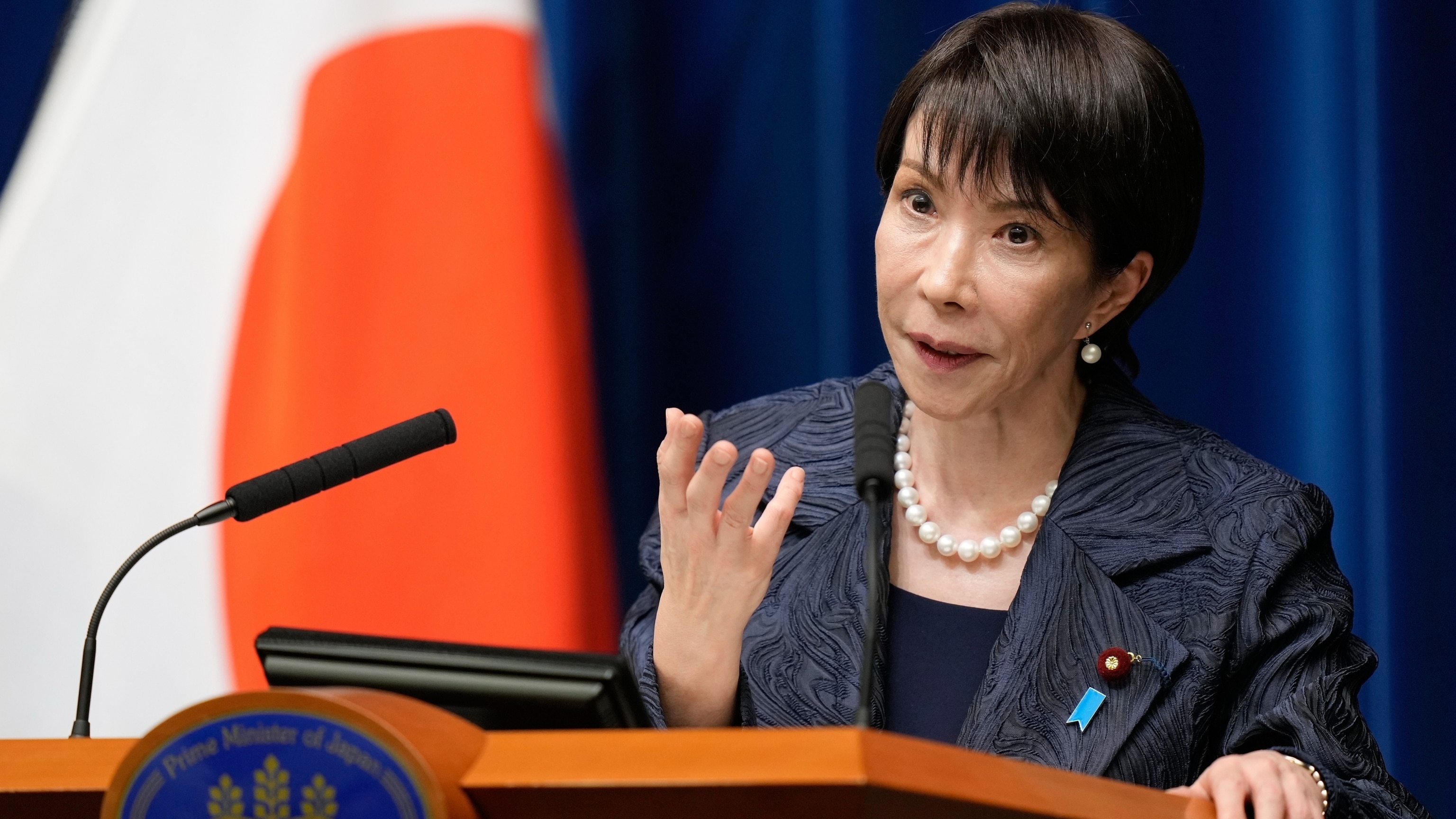
Japan's Defense Ministry has disclosed an 8.9 trillion yen ($55.6 billion) budget request that puts artificial intelligence, drone swarms, and hypersonic missiles at the center of its "new warfare" strategy. The ministry explicitly stated that the war in Ukraine has proven that warfare is being redefined, and Japan must "drastically strengthen its deterrence and response capability."
The budget includes attack drones to be launched from above or under water in coordination with long-range missiles, an integrated "AI orchestrator" platform for command and control, and submarine-launched hypersonic missiles. A dedicated "Defense Ministry cloud" for secure communications is also planned.
What makes this budget particularly significant is that AI is entering the decision loop for the first time: battlefield assessment and target selection can now be AI-assisted, changing the role of human commanders from decision-makers to supervisors. Meanwhile, Japan's aging population means fewer military personnel, making unmanned weapons a necessity rather than an option. However, Japan's commercial drone market is dominated by Chinese imports, making full domestic production a significant challenge.
Suppliers like Mitsubishi Heavy Industries, Kawasaki Heavy Industries, and IHI Corp. have seen profits rise with the defense buildup, but the industry remains constrained by constitutional limits on the use of force. US AI technology providers may become partners, while China has criticized Japan's defense buildup as "new militarism."
The AI technologies being developed for military purposes share core technology with civilian applications. The "AI orchestrator" platform is essentially a military-grade AI workflow engine, and hypersonic trajectory control shares algorithms with autonomous driving. What's proven on the battlefield today often becomes industrial products tomorrow.
The most noteworthy aspect of this budget isn't the money — it's the "AI orchestrator" concept. When AI begins participating in target selection, the human role in the command chain shifts from "decider" to "overseer." This isn't science fiction; it's already written into an 8.9 trillion yen budget document.