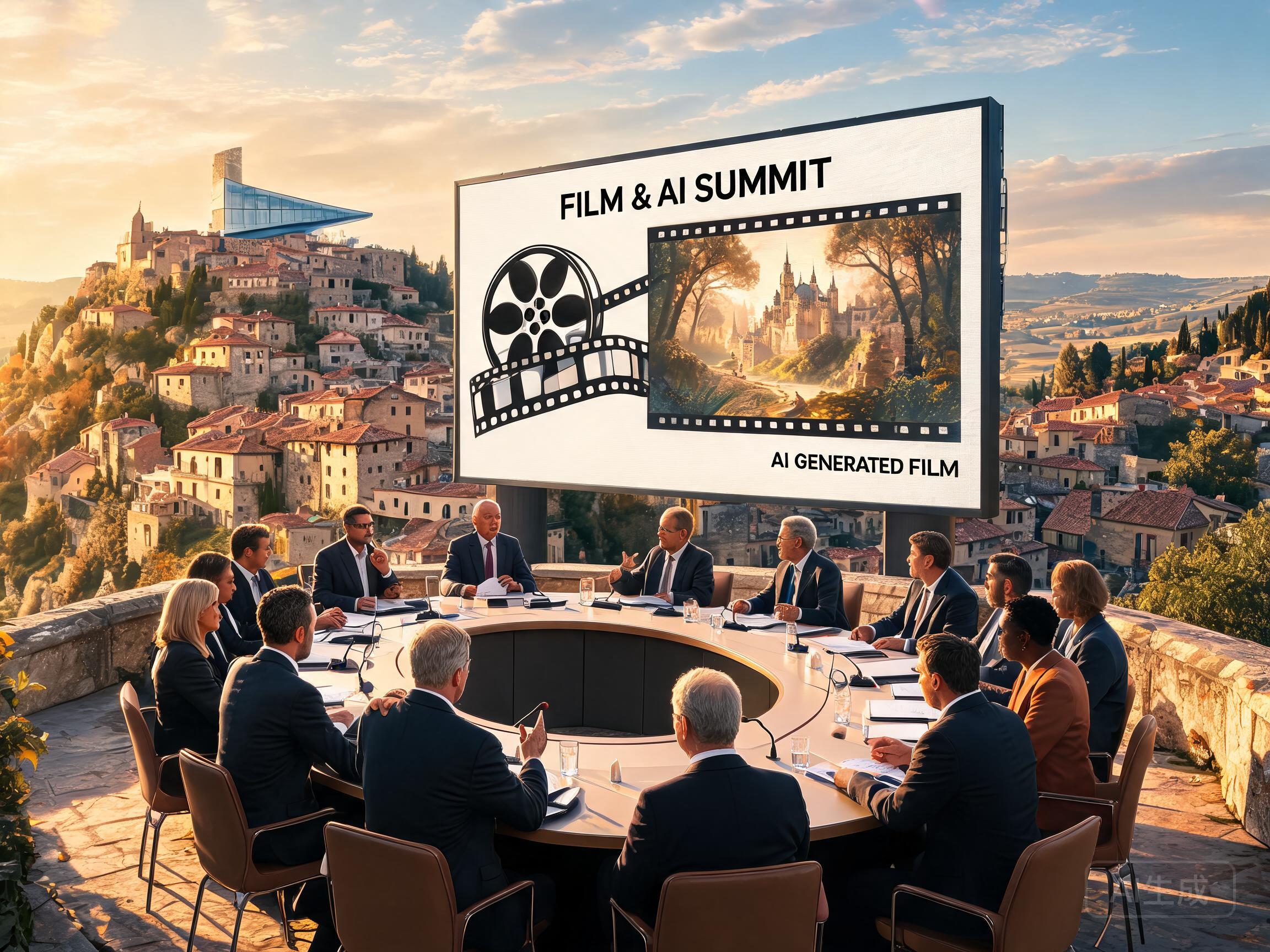
The medieval hilltop village of Saint-Paul-de-Vence in the south of France played host this week to a gathering of unusual weight: the "Lumière Summit," co-chaired by French President Emmanuel Macron and South Korean President Lee Jae-myung, where global film heavyweights — including Netflix co-CEO Ted Sarandos and NBCUniversal Studio Group chairman Donna Langley — came together to discuss how AI, streaming and social media are reshaping film and the creative industries.
In his opening remarks, Macron issued a warning: if AI becomes a tool to replace, or claim to replace, creators, the world would make a "tremendous mistake." He called for "taking back control" of the transformations driven by AI and digital platforms, warning about their effects on creativity and society. The French president chose a pointed opening line: "We have never looked at screens so much, and yet, by trying to watch everything, we risk ending up seeing nothing."
Named after the Lumière brothers, pioneers of cinema, the summit was deliberately held at the Maeght Foundation in Saint-Paul-de-Vence — a museum famous for its collection of modern art. Organizers said the one-day event aims to foster direct dialogue on the future of cinema in the age of AI, streaming and the creator economy, bringing together government officials and cultural industry representatives from more than 55 countries.
South Korean President Lee Jae-myung said at the summit that AI should be developed "in a more responsible and human-centred way." The two leaders' statements come at a moment of peak anxiety across the global creative industry: studios worry about copyright being scraped at scale for training models, actors and writers fear replacement, and independent filmmakers struggle to secure financing in a streaming-dominated landscape.
Macron also aimed at the platform giants, calling on YouTube to finance content and warning that streaming and short-video platforms pose a growing threat to France's cultural model. In his view, the rise of AI and social media must not come at the expense of creators — "if we want culture to thrive, we must ensure the people who create it are rewarded."
The significance of this summit may extend well beyond cinema. With AI-generated video now nearly indistinguishable from reality and short-video algorithms devouring audience attention, France and South Korea chose to convene at head-of-state level to ask how creativity should survive the AI era. That itself is a signal: the protection of creators' rights is moving from an industry issue to a national agenda. As Macron put it, the question isn't about rejecting technology — it's about making sure technology serves people, not the other way around.