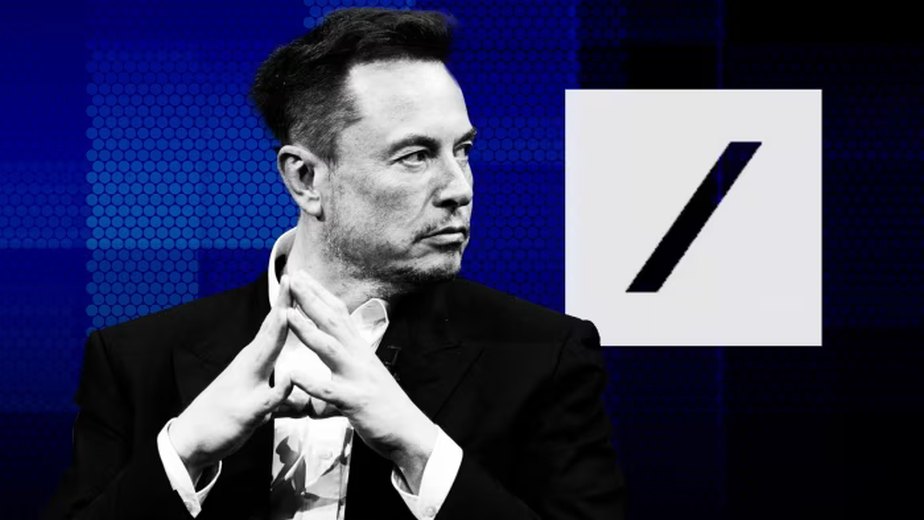
Faced with the industry-wide debate over whether AI should slow down, Elon Musk offered his answer at the All-In Summit in Los Angeles: instead of endless argument, let rivals check each other. Appearing remotely by video on September 15, Musk proposed a peer-review system — leading AI companies would test each other's models before public release.
Under his vision, xAI, OpenAI, Anthropic, Google, Meta and "three or four of the leading Chinese AI companies" would all grant competitors access to run a "test harness" to evaluate safety practices ahead of launch. His framing was blunt: "Instead of grading your own homework, you would at least have competitors grading your homework and raising the alarm if they see concerns." The risks in scope include assistance on biological weapons, nuclear weapons, and potential deception.
Musk argued the mechanism needs no new legislation to start — APIs between leading firms could be opened immediately; if problems aren't fixed in time, competitors retain the right to publicly question a model's launch readiness. He stressed that for the mechanism to truly work, China's participation is essential — a realistic acknowledgment of Chinese AI strength that echoes Dario Amodei's call for global coordination. Musk had earlier replied to Amodei's essay with a terse "Dario is right"; this proposal reads as his stated follow-through.
The practical foundation already exists: in 2025, OpenAI, Anthropic and Google made similar joint commitments on frontier AI safety. But Musk's plan goes further — it doesn't rely on corporate conscience but introduces "competitor oversight" as a natural hedge, turning commercial rivalry into a lever for safety governance. Skeptics, of course, have questions: will competitors go easy or smear for business reasons? Who guarantees the fairness of the test harnesses? Musk didn't answer those directly.
Notably, Musk shared the stage with SpaceX president Gwynne Shotwell, tying the proposal to his Grok roadmap and Amodei's pacing remarks. When the world's richest man proposes using "commercial competition" to restrain "technical acceleration," AI governance thinking is moving from "whether to regulate" to "who regulates, and how." Whether this experiment in rival-supervised testing lands will shape the next chapter of AI safety governance.