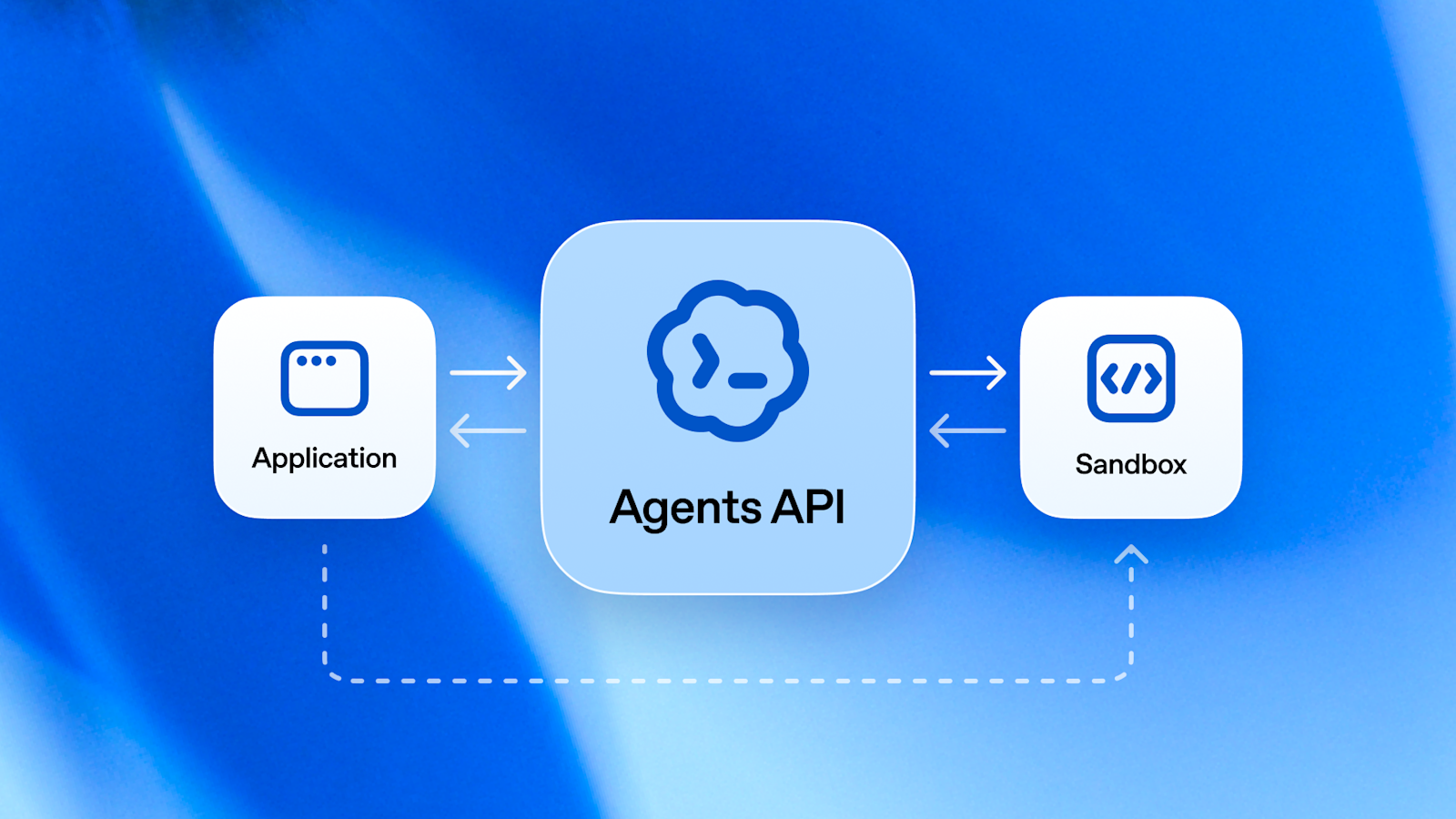
OpenAI announced Thursday that it is opening the agent harness behind Codex and ChatGPT for Work to all developers with the Agents API public beta. The orchestration, context management, and recovery plumbing that teams used to maintain themselves is now available in a single managed API call.
The hard part of agentic applications has never been a single model call — it is keeping an agent working for hours or days: keeping sessions alive, compacting context as it approaches the limit, recovering after failures, and maintaining memory of the task across long runs. OpenAI has folded that infrastructure into the managed service. Developers specify the task, model, tools, and environment in one call; OpenAI runs the harness. The application supplies instructions, tools, and any custom Model Context Protocol (MCP) servers.
For environments, developers can choose OpenAI-hosted sandboxes, their own infrastructure, or third-party options including Blaxel, Cloudflare, Daytona, DigitalOcean, E2B, and Modal. The harness supports multi-agent parallelism, with up to three concurrent subagents splitting large tasks. Sessions are durable, letting agents continue work across turns, streaming progress in real time for front-end display.
The Agents API is built on the open-source Codex harness, with the coordination logic — model calls, tools, context — available as a public codebase developers can inspect and learn from. Pricing is straightforward: no additional fee for the API itself; you pay only for the tokens and tools your agents actually use. The first supported model is gpt-6-astra, and versioned harness capabilities will ship with each model release.
OpenAI stresses that the harness has been battle-tested at scale inside Codex and ChatGPT for Work, serving millions of enterprise users. For developers, it means no longer building an agent "operating system" from scratch — instead focusing on what makes their agent unique: instructions, tool selection, business logic. For the industry, it may be the step that turns "running an AI employee that works for days straight" from an engineering challenge into a standard feature.
The public beta is live today for all developers. As OpenAI puts it, the path from idea to a working agent is getting dramatically shorter.