OpenAI officially launched its first custom processor "Jalapeño" (Spanish for "chili pepper") on August 26, 2026, marking the AI giant's full transformation from a pure software company to an integrated hardware-software player. Developed in partnership with Broadcom, this chip is designed specifically for inference tasks rather than model training, demonstrating remarkable energy efficiency.
Core Highlights
Outperforming Nvidia
- Power consumption: only 700 watts, far below Nvidia's 1,200-watt equivalents
- Response speed up to 3.6x faster
- Work output per watt increased by 1.9x
- Entire design cycle completed in just 9 months, assisted by internal AI tools throughout
Notably, this chip is currently for OpenAI's internal use only and not available for sale. But this alone is enough to shake the market—when a software company can design hardware that surpasses industry benchmarks in just 9 months, the rules of the game have fundamentally changed.
Why Does This Matter?
For the past two years, the bottleneck in the AI industry has been computing power. Models keep getting bigger, but GPU supply is tight and electricity bills are staggering. By choosing to build its own chips, OpenAI is essentially solving the most fundamental cost problem. If "Jalapeño" truly delivers on its promised performance, OpenAI's inference costs could be cut in half, which would be a major boost for ChatGPT's pricing strategy and profit margins.
Industry Ripple Effects
On the same day, other players weren't sitting idle:
- Anthropic expanded memory features to work seamlessly across platforms, targeting a $30 trillion TAM for its upcoming IPO
- Perplexity partnered with Nvidia to launch a local Agent, emphasizing data privacy
- Apple released an M6-powered Mac Mini dedicated to continuous agentic computing
- Google Cloud launched specialized Gemini models for the legal and financial sectors
What It Means for Ordinary People
You might think chips are far removed from your daily life, but that's not the case. A 71-year-old retiree is using AI coding tools to manage a $13.5 million church renovation project—with no programming or construction background, relying entirely on natural language prompts to track budgets, tasks, and history.
This is the true value of AI: it enables ordinary people to accomplish what previously only experts could do. And the significance of OpenAI's custom chip is that it will make more such applications cheaper and faster.
PLUS Tutorial: How to Ride This Wave?
If you want to leverage this AI hardware boom, here are three directions to focus on:
- Learn Prompt Engineering - Like that 71-year-old retiree, master the ability to command AI using natural language
- Pay Attention to Edge Computing - Perplexity's local Agent signals that more AI tasks will run locally in the future, protecting privacy while reducing latency
- Vertical Opportunities - Google's legal/financial specialized models show that AI applications深耕 niche markets have greater commercial value
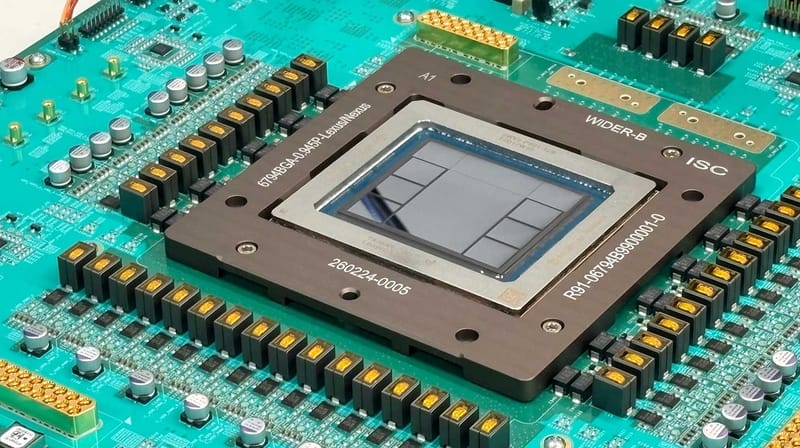
Image source: The Rundown