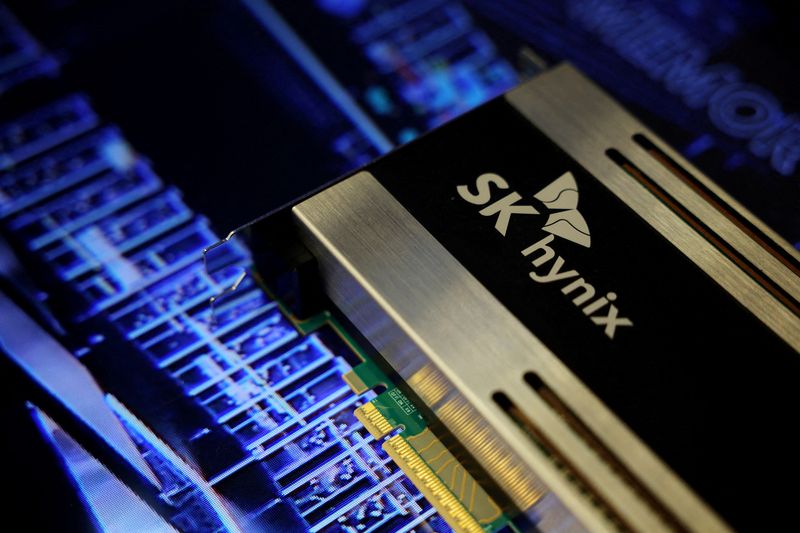
The world's second-largest memory chipmaker is brewing a deal that could redraw the map of American semiconductors. In an exclusive Reuters report on September 16 citing three people familiar with the matter, South Korea's SK Hynix is in talks with Intel about a collaboration that — if it goes through — would mark SK Hynix's first-ever memory chip production on U.S. soil.
The talks are exploring at least two scenarios. In one, SK Hynix would lease part of the capacity of Intel's long-planned chipmaking facility in Ohio. In another, it would form a joint venture with Intel and major cloud-computing companies eager to lock in memory chip supply, two of the people said. Specific products and investment scale have not been finalized; the talks remain exploratory. SK Hynix's response has been cautious: it is studying various options, including producing memory chips in the U.S., but "no decision has been made."
The potential marriage benefits both sides. For Intel, the Ohio fab is the flagship of its foundry revival but has moved slowly amid high costs and weak demand — bringing in SK Hynix would share the investment burden and fill utilization. For SK Hynix, U.S. production means getting closer to AI giants like Nvidia and Microsoft while dodging escalating chip-trade friction. For the Trump administration, it would be a clear win: Washington has been pressing chipmakers to build in America to address the severe memory shortage from surging AI and data-center investment. Commerce Secretary Howard Lutnick said earlier this month that Washington is studying tariffs on semiconductors — "produce in the U.S. and pay no tariff; produce elsewhere and pay" — adding fuel to the offshore-to-America fire.
The biggest obstacle, however, may come from Seoul. People familiar with the matter note that SK Hynix producing advanced memory in the U.S. could face a technology review by the South Korean government — advanced memory manufacturing involves core-technology transfer, which Seoul has reason to scrutinize. This distinguishes the plan from SK Hynix's already-underway packaging plant in Indiana, which handles back-end processes rather than true wafer fabrication.
In the same week as the talks, SK Hynix also reached a wage agreement with its union, paying half of profit-sharing bonuses in cash. Pacifying labor at home while planting a flag abroad, the memory giant is positioning itself early for the AI-era chip map. If U.S. memory production materializes, the geography of global semiconductors will see its biggest shift in a decade.