By 2026, "knowing how to use AI" is no longer a point in your favor at work. The real dividing line now is simpler: can you get AI to do its thing in front of the whole team?
Slack's new Slack Code is exactly that logic in product form.
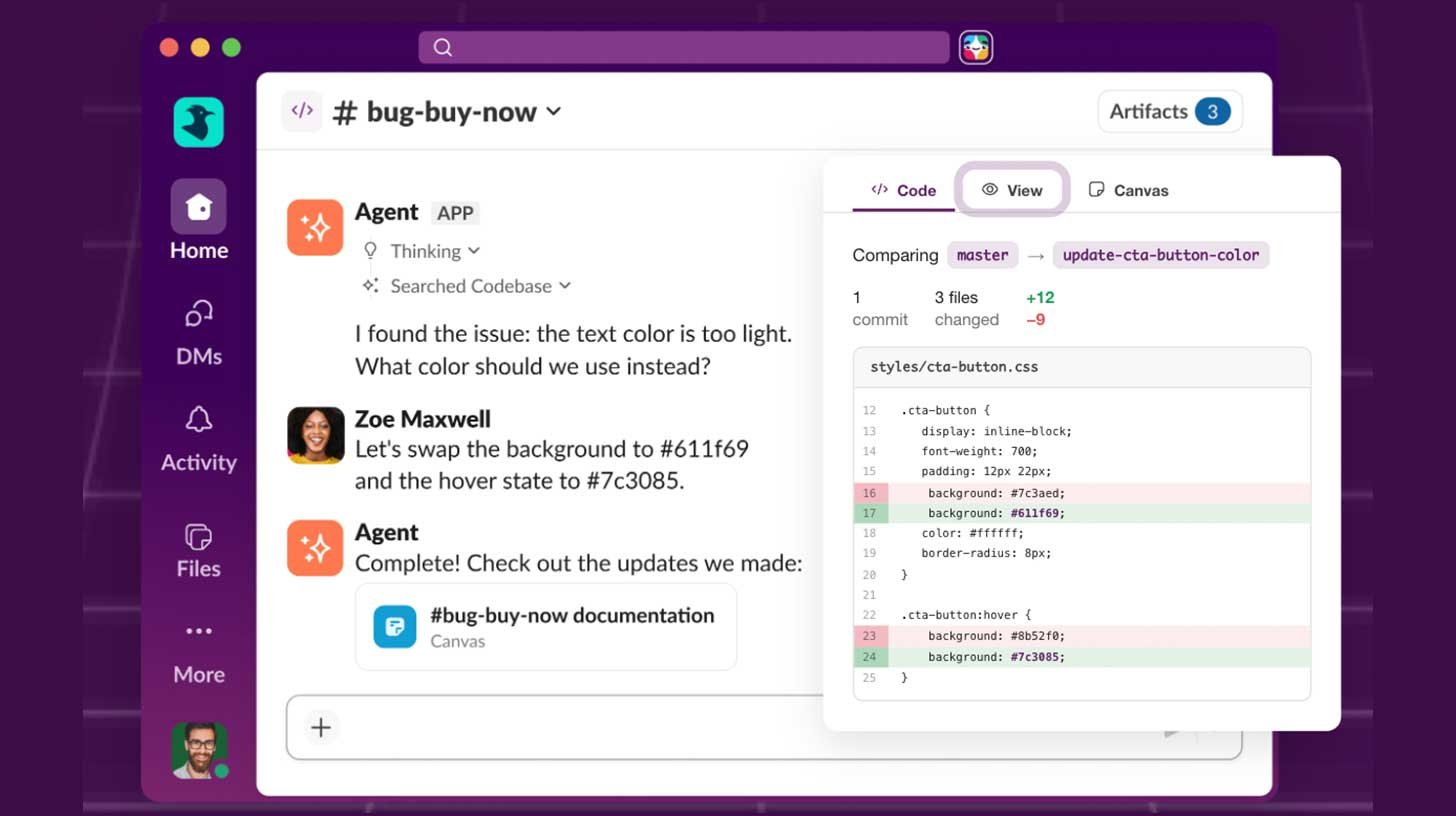
In plain terms, Salesforce has dropped coding agents straight into Slack's shared channels. You create a "code channel," the AI writes software inside it, and anyone on the team — engineer or not — can watch the whole process, chime in with opinions, and see live previews. A product manager wants an interaction tweaked? Just say it in the channel. Operations thinks the copy is off? Drop an @.
A few details worth noting:
- Deploys still go through human sign-off. AI finishing code isn't the same as shipping; the final call stays with people. It's a deliberately restrained safety design;
- Every completed project leaves an archived channel, effectively a searchable project record showing exactly who changed what;
- It launched fully open — every Slack plan gets it, and mainstream agents like ChatGPT, Claude, Devin, Vercel, and GitHub can plug straight in and start working.
My take: this move isn't about writing code, it's about claiming turf
White-collar workers already live in Slack for eight hours a day. Whoever owns the ground where humans and AI collaborate owns the next-generation office entry point. No matter how strong, a coding tool is just a tool; moving that tool into the collaboration hub is platform-level ambition.
Follow that logic and DingTalk and Feishu will almost certainly chase the same play — the "IM + AI agent" combination is fully portable, and with heavier local ecosystems, the race there could get even more intense.
A side-hustle idea while we're at it
That Rundown issue also came with a tutorial that lends itself to side income: turning "AI workflow audits" into paid consulting. Here's the play:
- Have Claude interview you in reverse, mapping the industries and tools you know best, and propose three consulting angles;
- Then have it generate a client-assessment questionnaire (publishable directly as a web Artifact) to sniff out where AI opportunities are hiding in a prospect's business;
- Once a client fills it in, feed the answers plus their website to Claude and let it pinpoint the highest-ROI bottleneck;
- Finally, have it package the findings into a one-page, client-ready proposal: diagnosis + bottleneck + actionable fixes + next steps.
Run through the whole loop and anyone with a working grasp of AI can take SME contracts — the bar is far lower than most people assume.
When coding becomes a group-chat project, the meaning of "technical moat" probably needs rewriting too.
Adapted from The Rundown AI · Slack turns coding into a group project (2026-08-21), with added opinion and localized interpretation.