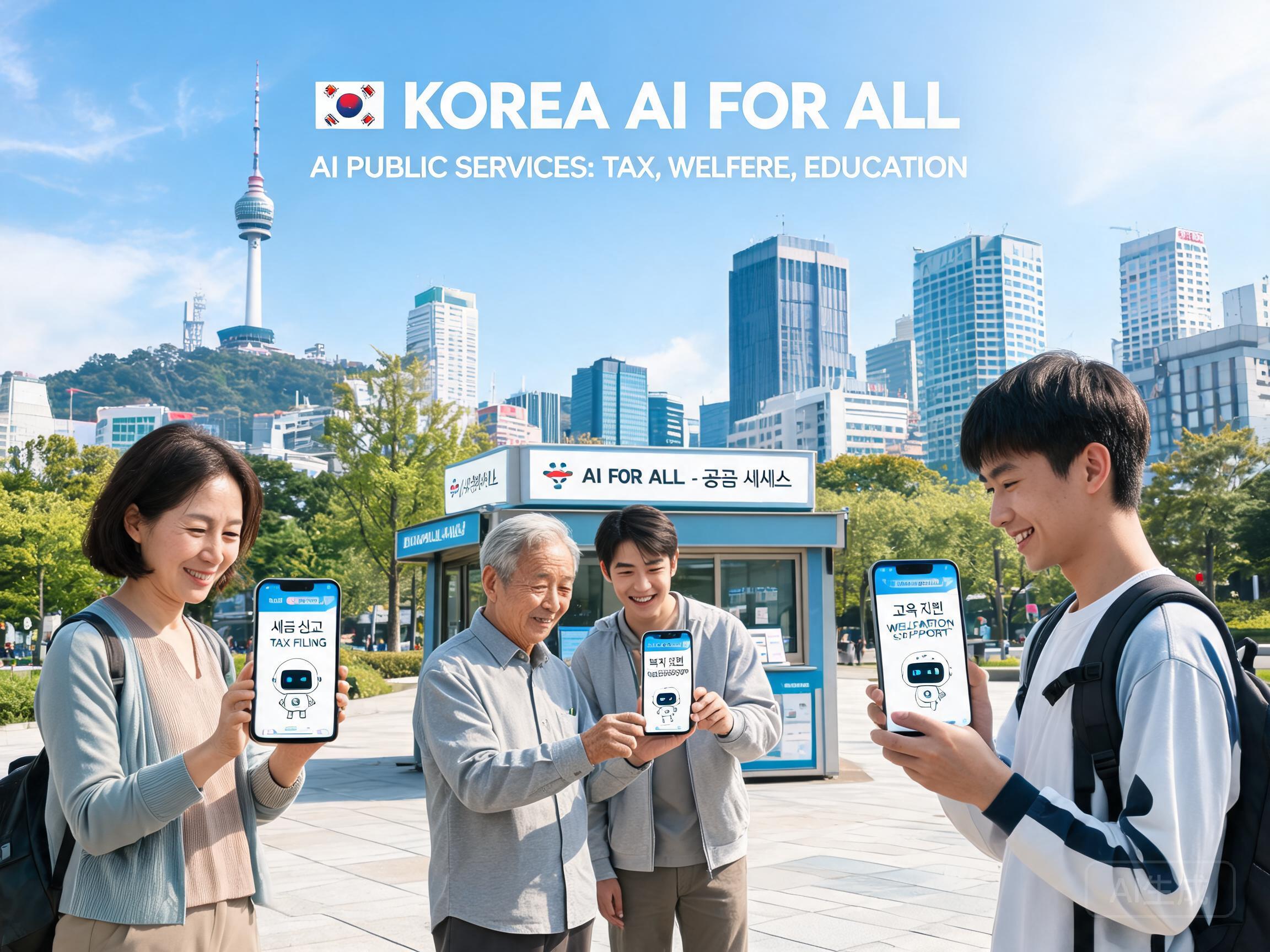
South Korea wants to make access to AI as easy as electricity or public transit. Instead of leaving premium AI tools behind a subscription, the government plans to pay for them, giving every citizen free access through an initiative called "AI for All." The program is designed to boost homegrown AI chatbots while reducing dependence on models developed in the US and China.
The AI tools go well beyond answering questions. They integrate with government services, letting people book doctor's appointments, receive tax guidance, search for apartments, and access other public services through AI. Small businesses can use free AI to file taxes and check eligibility for government support, parents can receive suggested educational content, and citizens get unlimited AI usage for educational purposes.
The plan is also about AI independence. By making domestic AI services free, officials hope people will rely less on American and Chinese platforms. To support the effort, the government will provide selected providers with up to 512 Nvidia B200 AI chips and help cover operating costs, though the program's total price hasn't been disclosed.
The market is already huge: more than 20 million South Koreans use free generative AI tools, and roughly one in four pays for AI services. The government tripled its AI budget for 2026 to about $7.2 billion, signaling it views AI as critical national infrastructure rather than another tech trend.
South Korea's approach contrasts sharply with the US, where free premium AI access is largely limited to specific groups like students. When a country provides AI like roads and education - as a public good - it changes not just access, but society's entire attitude toward AI. For other nations, this is a sample worth watching: when AI truly becomes "citizen welfare," its impact on the digital divide, industry structure, and even geopolitics is just beginning to show.