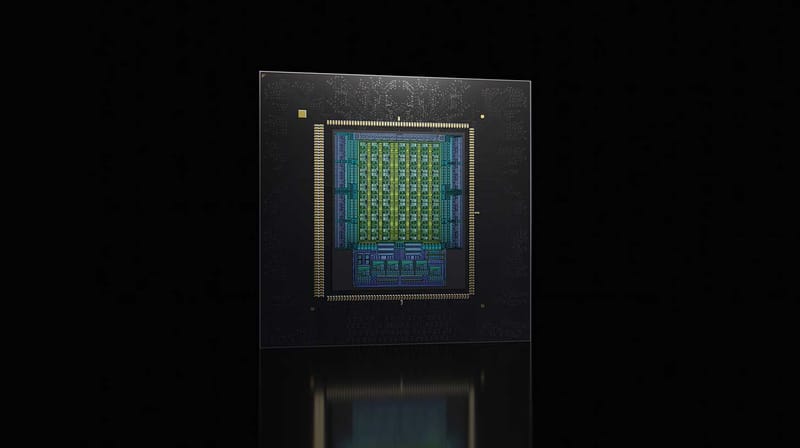
SpaceX and Nvidia announced a partnership to launch the first orbital data center by 2027. This "space cloud" will carry Nvidia's AI accelerator chips, providing real-time computing for deep space missions while also handling large-scale Earth data loads.
Elon Musk responded to Sam Altman's skepticism about space infrastructure feasibility: "Instead of arguing, let's just build it." This collaboration marks the deep fusion of commercial spaceflight and AI compute—satellites were once just data collectors; now they become true "space computers."
- Latency problem solved: For Mars missions, signal round-trip takes tens of minutes. Processing data in orbit drastically shortens decision time
- Unexpected Earth benefits: Orbital data centers can process global IoT device data, unaffected by ground network congestion
-
New market born: Space cloud computing may spawn entirely new service models like "orbital AI inference as a service"
-
Blue Origin: Bezos's company is planning similar projects but lags SpaceX by at least 2 years
- AWS/Azure: Amazon and Microsoft expressed interest, possibly leasing orbital compute to expand cloud services
- Regulators: FCC and ITU need new spectrum allocation and data sovereignty rules
Short term, no direct impact. Long term:
- More reliable autonomous driving: Vehicles access global traffic data via orbital AI, not just local sensors
- Faster disaster response: During earthquakes or floods, orbital AI analyzes satellite images in real-time to guide rescue
-
Costs may drop: If orbital compute scales, unit cost could be lower than ground data centers (no cooling, no land costs)
-
Follow SpaceX launch schedules: starlink.com and spacex.com announce payloads; watch for "Nvidia" or "AI payload" missions
- Learn edge computing: Orbital data centers are extreme edge computing; understanding MQTT, Kubernetes Edge helps grasp the architecture
- Join open-source projects: GitHub has several "space computing" projects like NASA's OpenMCT (mission control tool)—contribute code or file issues