Breaking News: Orbital Data Centers Are Coming
On August 25, 2026, SpaceX and Nvidia officially announced their collaboration to build orbital data centers in space, targeting deployment by the end of 2027. This partnership aims to bypass increasing local opposition and regulatory hurdles faced by ground-based facilities, offering a boundless environment for scaling artificial intelligence workloads.
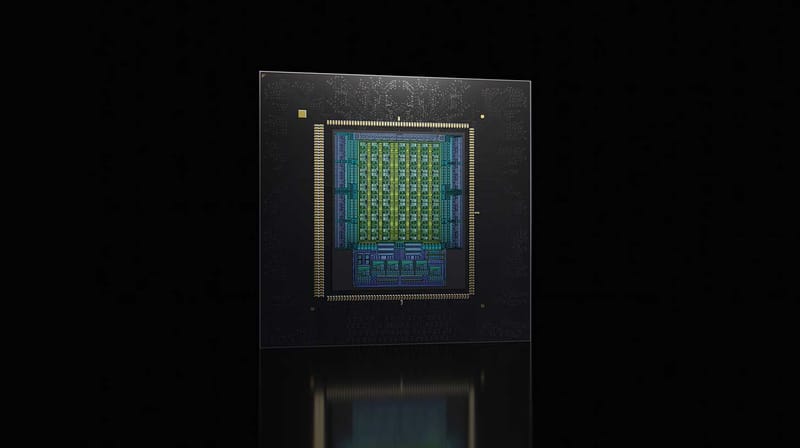
The hardware will utilize Nvidia's advanced Vera Rubin NVL72 rack system. Elon Musk highlighted that the space-adapted version is engineered to be lighter, denser, and more cost-effective, specifically modified to withstand the harsh conditions of space, including radiation and extreme temperatures. Each rack contains 72 chips that operate collectively, delivering significantly more processing power than previous generations. Although current orbital computing expenses exceed terrestrial costs by a factor of four, Musk anticipates this economic disparity will reverse in the coming years as launch costs continue to plummet.
Industry Background: The Dilemma of Ground-Based Data Centers
In recent years, the expansion of ground-based data centers has faced growing challenges: - Power supply bottlenecks: AI training requires massive amounts of electricity, and many regional grids cannot support it - Cooling difficulties: High-density computing generates enormous heat, and traditional cooling methods are inefficient - Land and community resistance: Residents oppose building large data centers nearby - Water consumption: Cooling systems require substantial water resources, exacerbating environmental pressures
The space environment naturally addresses some of these issues: vacuum conditions facilitate heat dissipation, solar energy provides unlimited clean power, and there are no ground land-use restrictions.
PLUS Tutorial: How Enterprises Should Evaluate Space-Based Computing Solutions
For enterprises considering adopting space-based computing, here's a four-step evaluation method:
Step 1: Analyze Business Requirements
Clarify whether your application scenarios are suitable for space deployment: - Latency sensitivity: Orbital data transmission has inherent latency, unsuitable for real-time interactive applications - Data volume: Frequent uploading and downloading of large amounts of data increases communication costs - Computing type: Batch processing, model training, and other non-real-time tasks are more suitable for space deployment
Step 2: Calculate Total Cost of Ownership
Comprehensively consider the following factors: - Launch costs: Currently about $2,000-$5,000 per kilogram of payload, but SpaceX Starship aims to reduce this to $100/kg - Maintenance costs: Remote maintenance is difficult, requiring high levels of automation - Communication costs: Satellite link bandwidth is limited and expensive - Insurance premiums: Risk premiums for launch failures and on-orbit malfunctions
Step 3: Assess Technology Maturity
Confirm whether suppliers possess: - Radiation protection capabilities: Space radiation can damage electronic components, requiring special hardening - Thermal management systems: Although space is cold, heat dissipation methods differ completely from ground-based systems - Autonomous operation capabilities: On-site repairs are impossible, so systems must have self-diagnostic and repair abilities - Energy supply solutions: Efficiency and lifespan of solar panels
Step 4: Develop a Gradual Adoption Strategy
Recommend phased implementation: 1. Pilot phase: Select non-critical workloads for small-scale testing 2. Hybrid deployment: Maintain both ground and space computing, dynamically allocating based on task characteristics 3. Full migration: After verifying feasibility and economics, gradually expand space deployment scale 4. Establish contingency plans: Prepare ground backup solutions to handle satellite failures or communication interruptions
Perspective: The Future Prospects of Space Computing
The SpaceX-Nvidia collaboration marks the transition of space computing from science fiction to reality. But this is just the beginning; in the next five years we may see:
- More participants entering: Cloud providers like AWS, Azure, and Alibaba Cloud may follow suit
- Specialized space chips: Low-power, high-reliability processors optimized for space environments
- Orbital edge computing: Processing data directly on satellites to reduce backhaul bandwidth requirements
- Space data center clusters: Multiple orbital sites forming distributed computing networks
However, challenges remain: - Regulatory uncertainty: International space law's regulation of commercial space activities is incomplete - Security risks: Threats from space debris, solar storms, etc. - Geopolitical factors: Space computing may become a new arena for strategic competition
For most enterprises, space computing will remain a supplement rather than a replacement in the short term. But as launch costs decline and technology matures, this "cloud in the sky" could become a mainstream option within the next decade. Pay attention early, experiment incrementally, and seize opportunities in the next wave of computing revolution.