Apollo 17 astronaut Harrison Schmitt speaks at the Artemis II ceremony, passing the torch from the Apollo era to the next generation of space explorers.
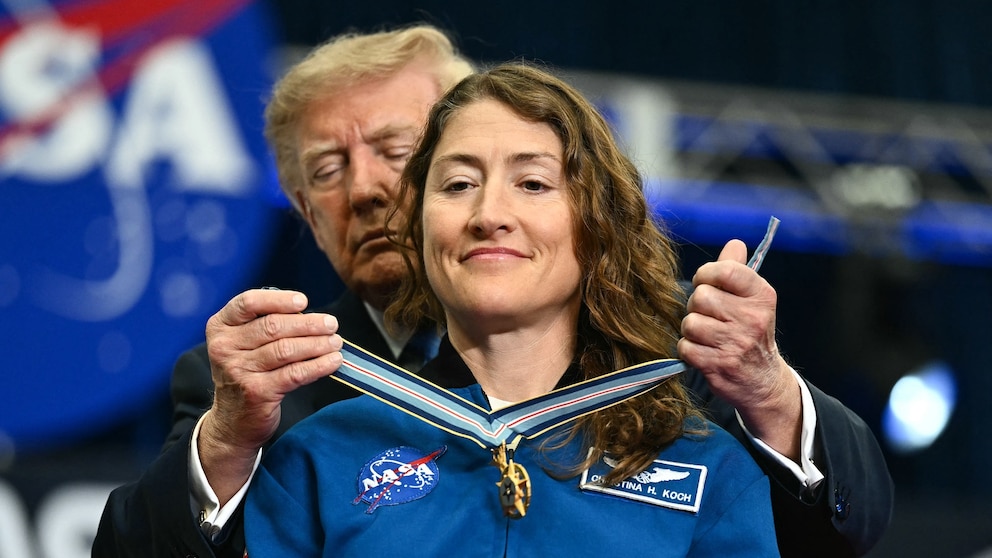
On August 28, 2026, Trump attended a deceptively traditional ceremony at NASA's Johnson Space Center in Houston—awarding the Congressional Space Medal of Honor to the Artemis II crew.
The crew—commander Reid Wiseman, pilot Victor Glover, mission specialist Christina Koch, and Canadian Space Agency astronaut Jeremy Hansen—set a new human distance record during their April test flight around the Moon.
But what's actually notable isn't the medal itself. Trump used the occasion to sign an executive order establishing the U.S. Space Academy. The new school aims to "attract, train and graduate the very best of our nation," serving the Space Force, NASA, and the civilian space industry alike.
No campus has been named yet, but the model is clear: West Point meets space.
This isn't just a medal ceremony plus a school announcement. Several signals stand out:
- Space talent is being treated as a shortage crisis. From Apollo to the Shuttle to the ISS, the U.S. has relied on ad-hoc training. The Space Academy formalizes talent development as a strategic priority
- Civil-m military integration is the new direction. The Academy serves both military and civilian needs—the space sector is being positioned as more than a government or Pentagon domain
-
The medal's bar is razor-high. Only 34 have received it since 1969. Artemis II joins that list, and their flight data goes straight into planning for the 2028 lunar landing mission
-
NASA Administrator Isaacman was front-and-center—a retired Navy captain whose background is in commercial space, his presence signals tight ties between the academy and the commercial sector
- Trump called ISS astronauts from Mission Control—after the ceremony, he became the first sitting president to speak with ISS crew from Houston, sharing the Space Academy announcement live in orbit. The astronauts' response: "We're thrilled"
- Artemis III crew was also unveiled—NASA Deputy Administrator Matt Anderson warned during the event: "The second space race has begun, and right now America is on the shot clock"
Space-related STEM talent demand is about to surge, which impacts several groups:
- Students considering engineering, physics, or computer science—space programs will see stronger job-market pull
- Commercial space workers—from rocket launches to satellite comms to space tourism, the academy creates a talent pipeline that benefits the whole ecosystem
- Anyone watching U.S.-China space competition—China is also ramping up aerospace talent training. This will be an increasingly competitive arena
A "West Point" for Space
What's clever about this academy isn't just the concept—it's the model. Instead of bolting space courses onto existing universities, Trump is going for a true military-academy-style pipeline that feeds both public and private space sectors from day one.
The message to the market is clear: space is no longer just a government project. It's a growing talent economy, and the U.S. is now building the engine to feed it.