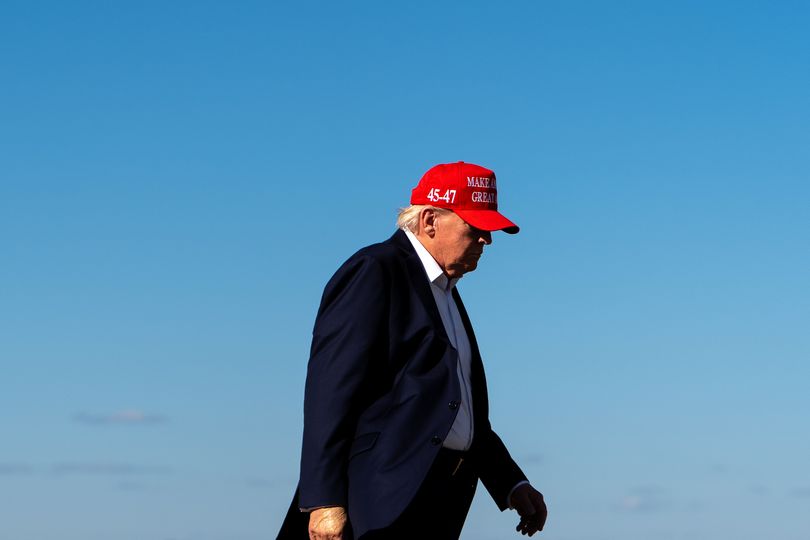
The debate over whether AI should slow down met its most direct confrontation in Washington on Monday, when President Donald Trump publicly pushed back against the tech industry's slowdown calls, calling the risk warnings from Anthropic CEO Dario Amodei and others a "hoax" and a "SICK conspiracy," while insisting that "a smart president is all that's needed" to rein in AI.
The clash comes against the backdrop of a rare industry-wide pivot over the past week. On September 12, Amodei published an essay, "We Must Pace the Frontier," calling for third-party evaluators, industry coordination, and intergovernmental agreements to slow the pace of capability improvement at the frontier. Sam Altman and Elon Musk endorsed it within hours, and Altman went further, announcing OpenAI would not pursue an IPO this year. Trump's response on social media was unsparing: he wrote that calls to constrain AI were hurting America, part of a "SICK conspiracy" against AI and data centers.
During his trip to Ireland, Trump reiterated the stance to reporters: he acknowledged AI needs "some regulation," offered no specifics, and instead blamed unnamed "negative forces" for "bringing up things that won't happen." "Whoever wins AI, wins," he said. "Frankly, I want to keep it that way, because I don't want to cede the edge to China." The framing — AI as a strategic contest with Beijing — stands in stark contrast to the safety-first appeals of the tech leaders.
More telling still are the details of White House pressure on corporate decision-making. Citing NYT reporting, The Philadelphia Inquirer said Trump and Vice President Vance called Microsoft president Brad Smith to pressure the company to drop out of talks aimed at limiting AI development — in the same week Microsoft and several tech firms were discussing safety commitments. Trump also said the US should help Chinese customers buy more Nvidia chips, arguing "it's good for America." Altman responded on X: "No amount of American competitive pressure should justify recklessness, or let capabilities get ahead of alignment and monitoring. Where we will need the help of our government is for international coordination."
Markets have already voted: global chip stocks fell on Monday, with SK Hynix down over 6%, Samsung, Micron and AMD down over 4%, Nvidia down more than 2%, and SoftBank plunging 13%. With the White House and Silicon Valley openly split over speed versus safety, AI's next steps are fast becoming a political contest over trillions in capital.